Broken Dreams: The Silent Impact of Inadequate Sex Education On Teenage Girls Aspirations
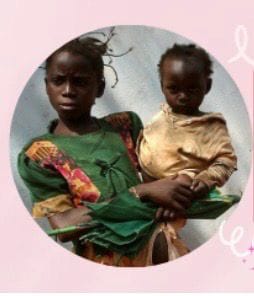
In the heart of every teenage girl is a dream to become a doctor, a teacher, an entrepreneur, an engineer and so much more. Yet for many girls, those dreams are cut short not by lack of talent or drive, but by silence. A silence born of shame, fear, and inadequate sex education.
Around the world, particularly in many developing regions, conversations around sex and reproductive health remain a taboo. In schools, if sex education exists at all, it is often abstinence, cloaked in fear rather than facts. At home, cultural and religious norms suppress open discussions. This results in teenage girls navigating through puberty, relationships, consent, and their bodies in a haze of confusion and misinformation.
The consequences of teenage pregnancy are devastating and far-reaching. Without access to accurate and age-appropriate sex education, many adolescent girls fall prey to myths and peer pressure. This often results in unsafe sexual practices, leaving them vulnerable to unintended pregnancies and sexually transmitted infections. According to UNFPA (2022), nearly 50% of births were from adolescent girls in Sub-Saharan Africa and unintended, underscoring the urgent need for comprehensive sexuality education.
In Nigeria, 23% of girls aged 15 to 19 have already begun childbearing (NDHS, 2018). For many, an unplanned pregnancy triggers a downward spiral of up to 50% adolescent mothers less likely to complete secondary school, limiting future employment opportunities and perpetuating cycles of poverty.
The risks to the mother are equally severe.
A study by Akanbi in 2021 showed that adolescent pregnancies carry an increased likelihood of obstetric complications, including anaemia, preterm labour, obstructed labour, and postpartum haemorrhage. These outcomes not only endanger maternal survival but also strain families, communities, and already fragile health systems.
Nonetheless this is not just a health issue. It is an economic one. It is about gender equality. It is about justice. Educated girls grow into empowered women. They earn more, marry later, and raise healthier children. When we deny them comprehensive sex education, we do not just endanger their health, we endanger their future and our collective progress.
Some argue that sex education encourages promiscuity.
This is a dangerous myth. Evidence consistently shows that comprehensive sex education delays sexual initiation and increases the likelihood of safe practices. It teaches girls not just about biology, but about consent, boundaries, self-worth, and decision-making.
So, what can be done? First, policymakers must act decisively by elevating Comprehensive Sexuality Education (CSE) from the margins of the curriculum to the mainstream. CSE should not be seen as an optional add-on but as a core subject just as essential as mathematics or science because it equips adolescents with life-saving knowledge. When taught effectively, CSE empowers young people to understand their bodies, respect boundaries, practice consent, and make informed choices about relationships and contraception.
Countries such as; Rwanda and Kenya, where CSE has been more systematically integrated, have recorded huge improvements.
Secondly, parents, guardians, and community leaders must be empowered to break the cycle of silence and stigma. In many communities, conversations about sex remain taboo, leaving adolescents to rely on myths and misinformation from peers. Creating safe spaces for dialogue within families and communities helps normalize guidance rather than judgment. For instance, programs that train mothers and fathers as “peer educators” have successfully improved communication about reproductive health in Ghana and Malawi. When community leaders and faith-based institutions openly support such discussions, it sends a powerful message that protecting the health and dignity of young people is a collective responsibility.
Finally, health institutions, civil society, and NGOs must expand youth-friendly services that adolescents can trust. Too often, young girls are turned away or shamed at clinics when they seek contraception or advice. Establishing adolescent-friendly corners in hospitals, offering confidential counselling, and ensuring that services are free of discrimination can transform health-seeking behavior. In Nigeria, pilot initiatives with mobile clinics and peer health educators have shown that when care is judgment-free and accessible, more adolescents step forward for counselling, HIV testing, and contraceptive services. Partnerships between government, NGOs, and civil society can scale these efforts nationally.
The combination of education, community engagement, and accessible healthcare can dismantle the barriers that perpetuate teenage pregnancy. This integrated approach does more than prevent early pregnancies, it safeguards the future of young girls, protects their right to education, and strengthens the foundation for healthier, more prosperous communities.
Teenage girls should be dreaming of diplomas, not diapers. They should be walking proudly to school, not hiding from stigma. And they should be armed with knowledge, not held hostage by ignorance. Let us break the silence for every girl who has ever dared to dream, and for the generations yet to come.
Dr Bakare AA is a reproductive biologist at the University of Lagos, Nigeria who specializes in female reproductive biology and committed to mentoring the young generation of girls on sexual education and reproductive health.