Collaboration: The Missing Link To Advancing Women’s Health Leadership
A health system without women in leadership is like a tree with deep roots but no branches; grounded, yet unable to reach its fullest height.
Women already anchor the system with their labour, their care, and their resilience, but without space at the top, the tree can never blossom, and the fruits of equity will remain out of reach.”
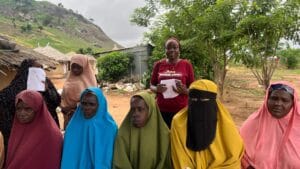
In Nigeria, as in much of the world, women form the backbone of the health system.
They are caregivers, nurses, midwives, veterinarians, public health officers, and community workers.
They carry the weight of care at every level, often in the most challenging conditions.
Yet when it comes to leadership where decisions about budgets, policies, and priorities are made women remain glaringly absent.
This leadership gap is not only unjust; it is a critical weakness in our health systems.
A recent report lamented the poor representation of women in leadership across the health sector. It is a paradox: women drive the workforce yet are rarely in positions to shape the policies that govern it.
The cost of this exclusion is not abstract. It reverberates in underfunded women health programs, inequitable access to care, and policies that fail to reflect the realities of those most affected.
When women’s voices are excluded, the resulting decisions lack lived experience and fail to prioritize the needs of half the population.
In my own advocacy journey, particularly through hosting the One Health Series, I have collaborated with brilliant women redefining what health leadership could look like.
I have shared platforms with Dr. Deborah Thomson, Dr. Sherifat Balogun-Raji, Laura Khan, Amany Tharwat Mohammed, Dr. Randa Bazzi, Dr. Zainab Danbazua, Oluwaseyi Oluyori, Busayo Akindolie, and Dr. Olufemi Mulkah Ajagun-Ogunleye.
These women represent human medicine, veterinary science, public health, and environmental science.
The expertise they brought to the table was remarkable.
Yet outside such collaborative spaces, their leadership is too often muted or overlooked.
The truth is, women’s advancement into leadership is not hindered by lack of talent; it is blocked by fragmented systems that celebrate contributions at the grassroots but diminish influence in policy rooms.
When decision-making becomes siloed in ministries, agencies, or academic institutions, women’s voices are the first to be sidelined.
The absence of intentional collaboration across sectors; government, academia, civil society, and advocacy only deepens this inequity.
For too long, women have been applauded for their “service” but denied the opportunity for leadership.
Collaboration, however, can change the story. When women connect across disciplines, they form networks that transcend silos.
When institutions collaborate with civil society, mentorship opportunities emerge for the next generation of women leaders.
And when advocacy platforms deliberately spotlight women, they amplify voices that might otherwise be drowned out. I have witnessed this firsthand.
A veterinarian in my network collaborated with a public health physician to launch an antimicrobial resistance awareness drive in their local community.
A young researcher featured on the One Health Series gained mentorship opportunities because of the visibility created.
These may seem like small victories, but together they build momentum toward systemic change.
We should also remember that representation is not just about numbers.
It is about the ability to influence priorities, budgets, and strategies.
Women leaders bring perspectives that challenge the “business as usual” approach in health and agriculture.
Evidence shows that when women have decision-making power, household diets improve, child stunting drops, and communities thrive.
Leadership that ignores women is not simply incomplete it is ineffective.
Closing the leadership gap requires intentional action. We must create funded leadership pipelines for women, foster cross-sector platforms for dialogue, and hold institutions accountable for gender parity in decision-making.
Nigeria’s National Gender Policy and action plans nod toward empowerment, but without resources and collaboration, they remain empty promises.
Accountability mechanisms are critical: quotas, gender-sensitive budgets, and mentorship programs that ensure women not only enter leadership spaces but thrive in them.
The report is a timely reminder that gender inequities in health leadership are not just about fairness they are about survival.
A health system that excludes women’s perspectives cannot adequately respond to crises, from maternal mortality to pandemics.
During the COVID-19 pandemic, women made up the majority of frontline workers, yet decisions about personal protective equipment, vaccine rollout, and workplace safety were dominated by male voices.
The result was predictable: policies that often overlooked the safety and specific needs of women healthcare workers.
The health of our societies depends on diverse leadership that reflects the communities it serves.
Women are not only the backbone of healthcare delivery; they must also be the architects of the policies that shape our systems.
Collaboration is the bridge to get us there. Until we dismantle the barriers that keep women from leadership and build intentional pathways for their voices to rise, our health systems will remain weaker than they should be.
The future of health leadership must be collaborative, inclusive, and unapologetically gender-sensitive. Anything less is a disservice to the women who already carry so much, and to the societies that depend on their strength.
Women deserve more than token recognition; they deserve genuine seats at the tables where the future of health is decided.
In the end, collaboration is not just a strategy it is a lifeline. By working together across disciplines, across institutions, and across generations, we can close the leadership gap and build health systems that serve everyone fairly.
For Nigeria, and for the world, the time to act is now.
Akanbi-Hakeem Hauwa Bolanle is a veterinarian, public health scholar, and One Health advocate dedicated to advancing gender equity, combating antimicrobial resistance, and strengthening health systems in Nigeria and across Africa. She can be contacted via; LinkedIn: Bolanle (Hauwa) Akanbi-Hakeem